
Stop losing money around blasting.
LaserGT helps drydocks and shipyards reduce the hidden cost layer around abrasive blasting, local steel repair and coating preparation.
We target the scopes where blasting, UHP waterjetting or mechanical preparation creates more cost, delay and disruption than the repair itself justifies.
And when the business case is right, LaserGT can scale with multiple laser units, parallel work fronts and high-power 6000W laser capacity for larger surface preparation areas.
Zero abrasive
No cleanup
No waste
Less work-front disruption
Scalable drydock execution
High-power 6000W capacity
Beam width up to 50 cm
Blasting may be fast on the steel. But slow for the dock as a whole.
For large open hull areas, conventional blasting can still be the right method.
But for local corrosion, weld seams, tank repairs, coating damage, difficult geometry, punch-list work and selected larger areas, the surrounding burden can be larger than the surface itself.
The direct blasting rate is only one part of the cost.
The real cost sits in the system around it.
| The Visible Job | The Hidden Cost Around It |
|---|---|
| Local corrosion | Containment, access, cleanup, permits |
| Weld seam preparation | Grinding hours, inspection delay, rework |
| Tank coating repair | Ventilation, waste, confined space permits |
| Spot coating damage | Blasting setup, masking, work-front closure |
| Punch-list before undocking | Remobilization, waiting, late-stage disruption |
| Areas near other trades | Dust, water, overspray, blocked work fronts |
| Larger selected repair areas | Media volume, cleanup, waste, coordination burden |
| Multi-area drydock campaign | Closed work fronts, sequencing issues, delayed handover |
Where LaserGT Fits Across the Vessel
LaserGT is strongest on selected scopes where surface preparation creates more burden than the repair itself.
Hull spot repair and selected hull areas
For local corrosion, coating damage, weld zones and selected hull repair areas where blasting or waterjetting creates unnecessary containment, cleanup or disruption.
Tanks and ballast spaces
For selected tank and ballast repair scopes where abrasive media, water, sludge and cleanup become a major part of the job. Always under gas-free, ventilated and controlled conditions.
Piping, valves, brackets and supports
For local rust, coating removal and inspection preparation around complex geometry where blasting, grinding or waterjetting becomes difficult or creates excessive secondary work.
Repair sections and steel renewal areas
For surface preparation around steel repair, weld zones, modification areas and coating touch-up before inspection, coating or further work.
Dockside and yard equipment
For selected maintenance on cranes, loading gear, dock structures, rails, brackets and exposed steel equipment where rust removal or coating preparation is required with less dust, waste and cleanup.
Punch-list and late-stage repair
For selected last-stage repair scopes before undocking, where remobilising blasting or waterjetting can create unnecessary delay and work-front disruption.
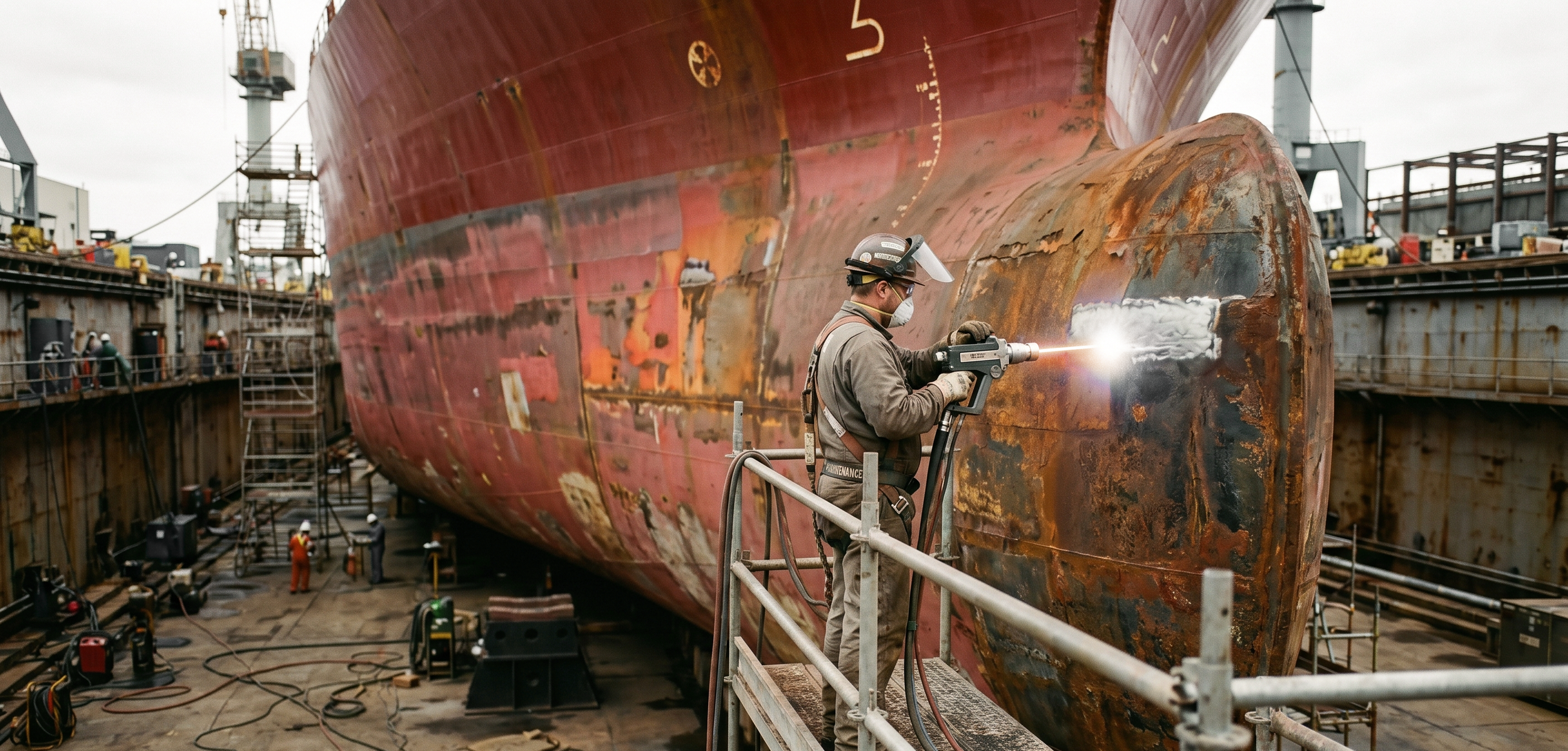
Measure the real execution difference
LaserGT should not only be compared by square metres per hour.
The real comparison is the total execution model around the job.
-
![]()
Setup time
-
![]()
Manpower requirement
-
![]()
Access requirement
-
![]()
Containment requirement
-
![]()
Water handling
-
![]()
Sludge handling
-
![]()
Abrasive media handling
-
![]()
Spent grit cleanup
-
![]()
Work-front disruption
-
![]()
Surface readiness
-
![]()
Total closeout time
-
![]()
Scalability with multiple units










The fastest method is not always the method with the highest surface speed. It is the method that moves the vessel through the dock with the least total burden.
We do not just replace blasting. We reduce the cost layer around blasting.
Abrasive blasting is not just a surface preparation method. It is an execution model.
That model often includes:
-
![]()
Abrasive purchase
-
![]()
Freight
-
![]()
Storage
-
![]()
Handling
-
![]()
Compressors
-
![]()
Blast Pots
-
![]()
Hoses
-
![]()
PPE
-
![]()
Containment
-
![]()
Scaffold
-
![]()
Ventilation
-
![]()
Dust Control
-
![]()
Cleanup
-
![]()
Waste Recovery
-
![]()
Waste Disposal
-
![]()
QA/QC
-
![]()
Rework
-
![]()
Closed Work Fronts
-
![]()
Delayed Nearby Work
-
![]()
Delayed Departure










The abrasive invoice is not the real story.
The real cost sits around the job.
Laser surface preparation is not limited to small repairs.
The key is not whether laser can scale.
The key is where scaling creates better drydock economics than blasting.
LaserGT can be deployed as a scalable drydock method.
For selected larger scopes, we can increase capacity through:
Multiple laser units
Parallel work fronts
High-power 6000W laser systems
Beam width up to 50 cm
Dedicated laser operators
Integrated safety zones
Fume extraction and controlled execution
Rope access, scaffold, MEWP or ground-based deployment
| Scope Type | LaserGT Approach |
|---|---|
| Small local repair | One laser unit, compact crew, fast execution |
| Medium selected scope | One or more units, planned work front |
| Larger surface area | Multiple lasers in parallel |
| Broad surface treatment | 6000W laser capacity with beam width up to 50 cm |
| Difficult access areas | Rope access or adapted access method |
| Late-stage punch-list | Rapid mobilization and selected repair |
| Multi-area drydock campaign | Parallel laser teams across selected work packages |
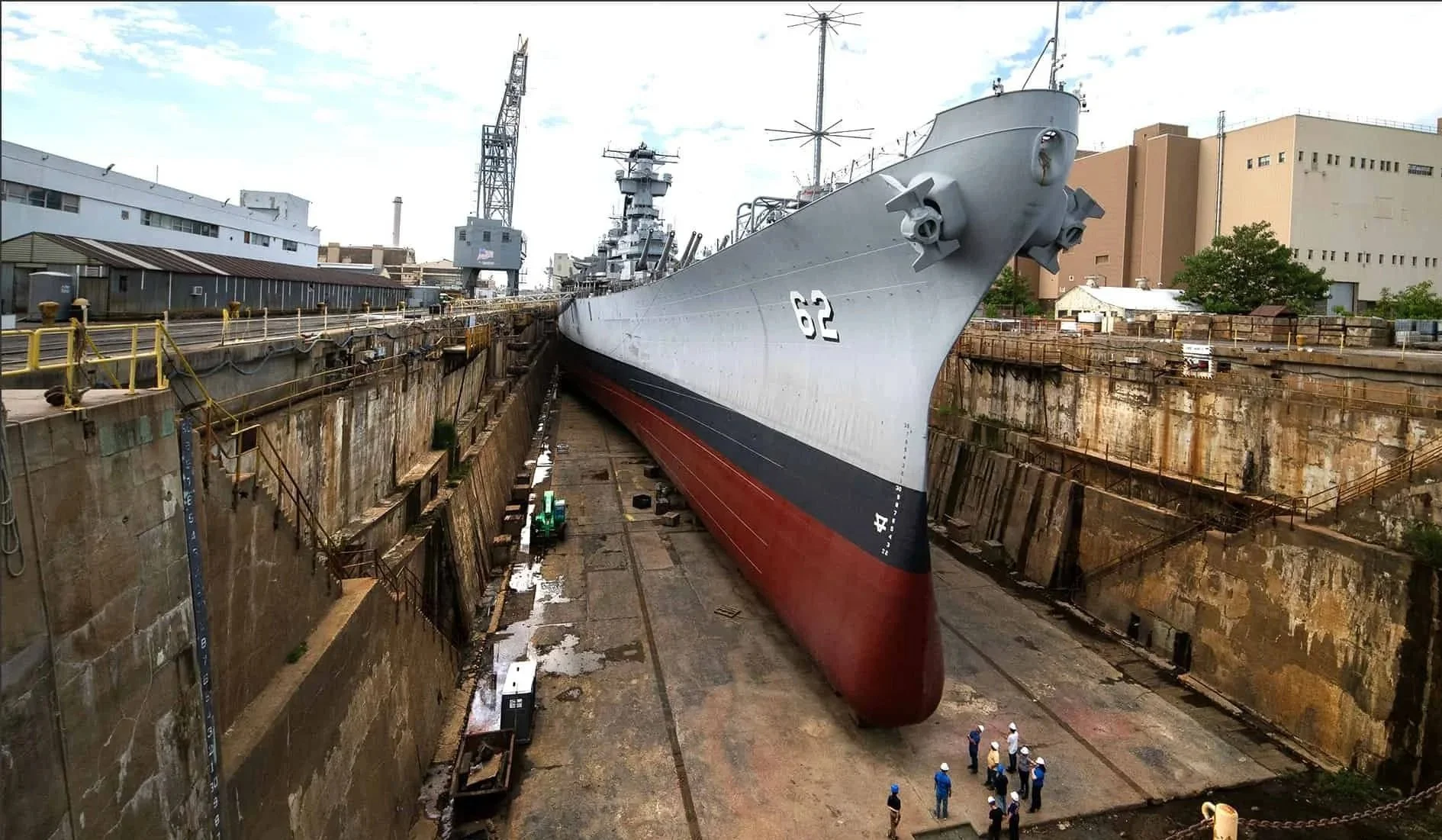
Hull-side preparation scenario: removing steps from the drydock model
A conventional hull-side preparation scope can require several separate steps before the surface is ready: scraping, waterjetting, UHP coating removal, water handling, sludge management, drying time and coordination around other trades.
In one representative drydock scenario:
2,400 m² required scraping and waterjetting to remove algae, marine growth and residues.
4,000 m² was the broader coating removal scope using UHP on the relevant exterior vessel areas.
The conventional route can take around 4 days.
LaserGT changes the execution model.
With the right equipment setup, high-power laser capacity, planned work fronts and trained operators, LaserGT targets this type of selected hull-side preparation scope in approximately 2 days.
The commercial value is not only speed.
It is the removal of entire process steps:
No abrasive media.
No spent grit cleanup.
No water from the laser process.
No water handling from the laser process.
No sludge from the laser process.
No wet-surface delay.
Parallel work can continue nearby.
| Conventional Execution | LaserGT Execution |
|---|---|
| Scraping of algae and marine growth | Controlled laser removal and surface preparation |
| Waterjetting creates runoff and wet residues | Dry laser process with no water runoff, no residues |
| UHP coating removal creates water handling and drying considerations | Laser coating removal on selected areas where technically and commercially suitable |
| Water collection and handling | No water |
| Sludge and wet residue management | No sludge |
| Drying time before next operation | No wet-surface delay |
| Spent grit cleanup if abrasive methods are used | No abrasive media and no cleanup |
| Larger exclusion zones around wet or abrasive work | Parallel work can continue nearby |
| Approx. 4-day conventional route | Approx. 2-day LaserGT target route |
| Multiple preparation steps before closeout | Fewer process steps from preparation to closeout |
*Execution time depends on coating type, surface condition, access, equipment setup and acceptance criteria. The 2-day target should be confirmed through a controlled drydock cost and execution comparison.
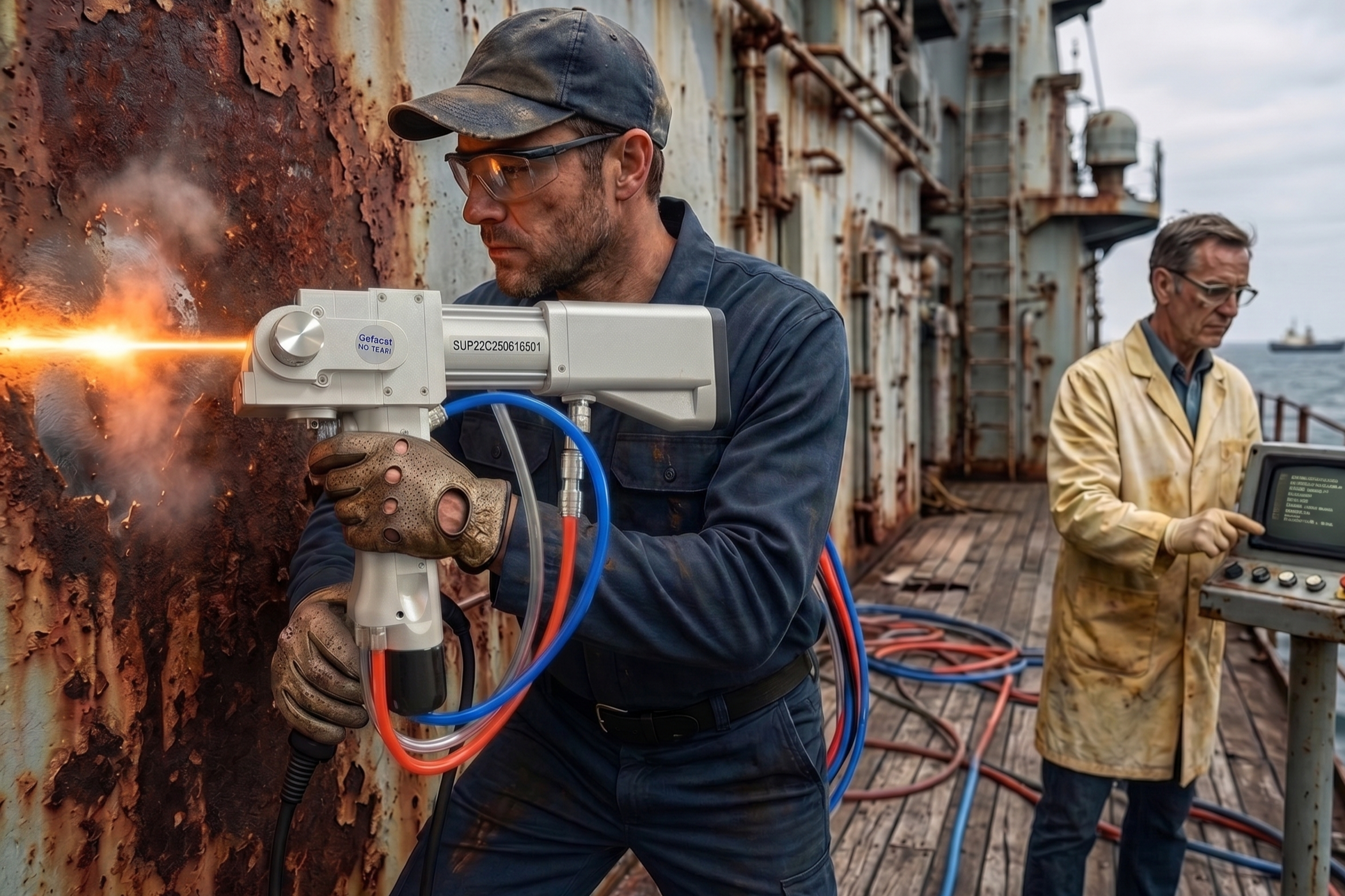
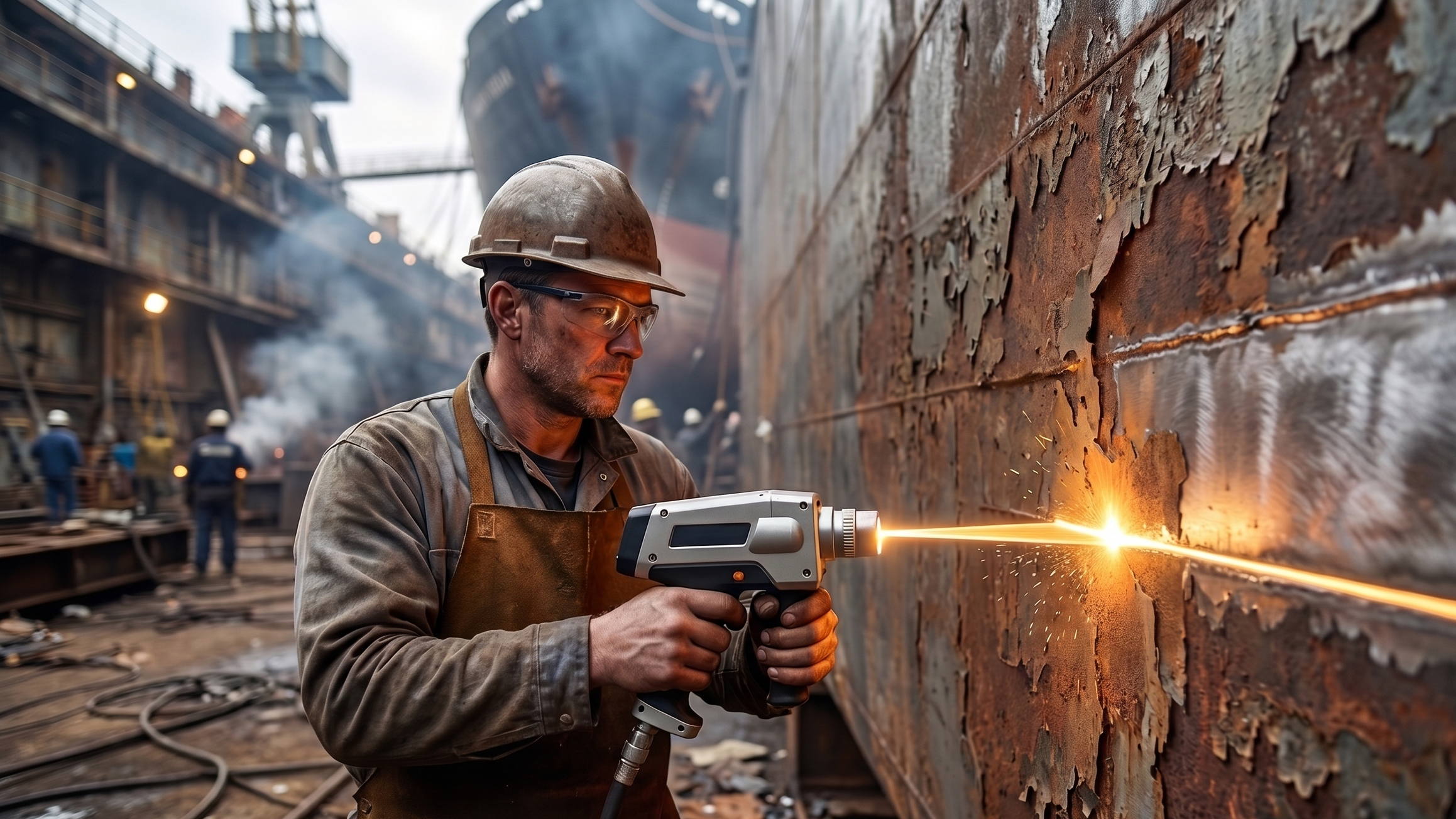
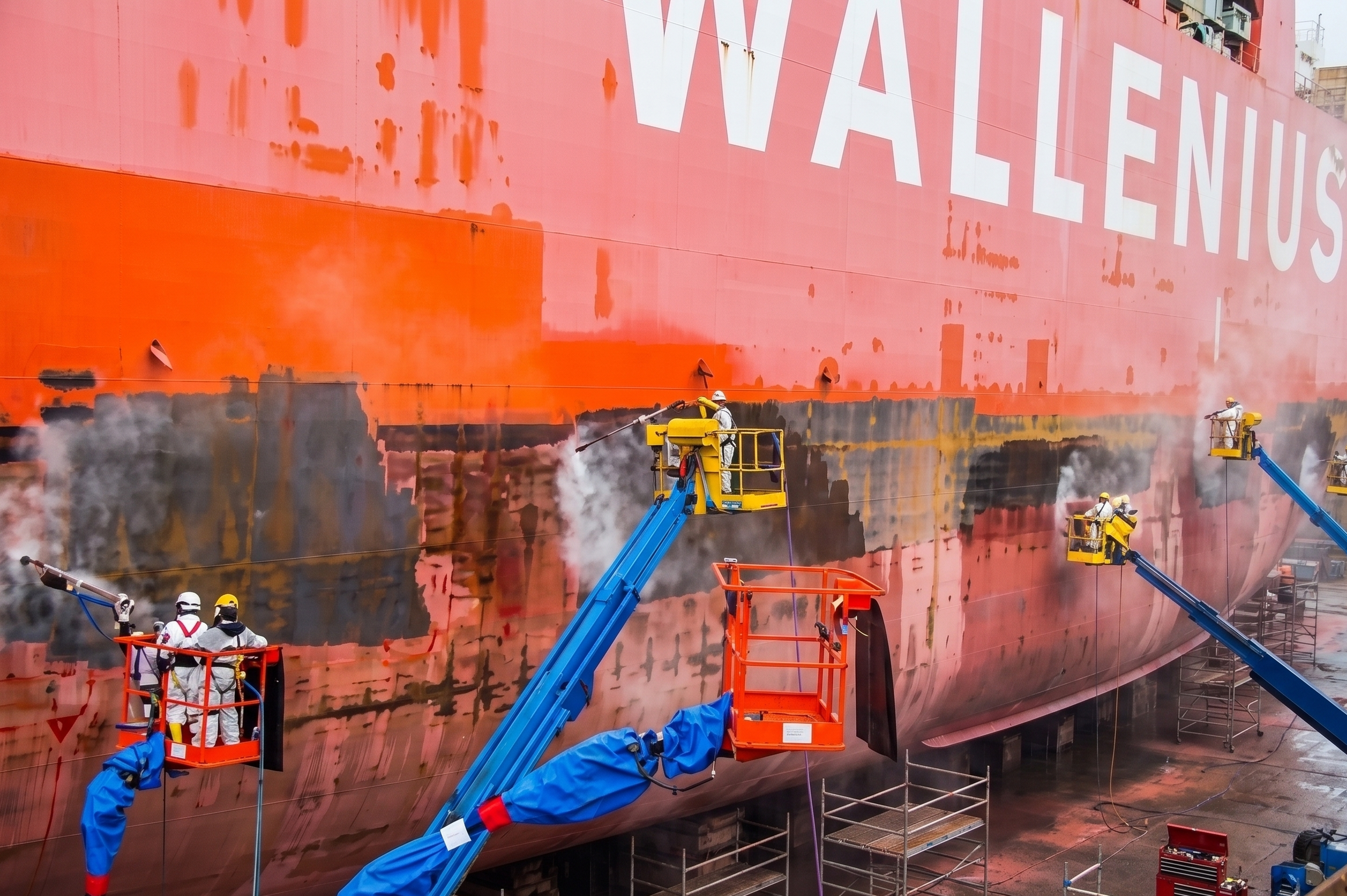
Built for selected scopes. Ready to scale.
LaserGT can start with a small high-burden scope, prove value fast and scale into larger drydock work packages.
| Drydock Scope | Why LaserGT Fits |
|---|---|
| Local corrosion repair | Avoids heavy blasting setup for small areas |
| Weld seam preparation | Controlled cleaning before inspection/coating |
| Touch-up after steel repair | Fast local surface preparation |
| Ballast tank spot repair | No abrasive media & water sludge |
| Difficult geometry | Better fit for selective treatment |
| Sensitive equipment areas | No dust and water impact |
| Rope access scopes | Smaller access footprint |
| Punch-list before departure | Rapid selected-scope execution |
| Emergency repair | No setup burden |
| Larger selected coating areas | Can scale using multiple laser units |
| Broader surface treatment | 6000W laser with beam width up to 50 cm |
| Multi-area drydock campaign | Parallel work fronts reduce total schedule burden |
The relevant question is not only how fast the steel is cleaned.
The relevant question is how fast the vessel moves through the dock with the least disruption to parallel work.
A small repair should not become a large operation.
A 50 m² local corrosion repair can look simple on paper.
But with conventional blasting, it can trigger containment, access, media handling, cleanup, waste disposal and work-front restrictions.
With LaserGT, the same selected scope can be approached with a smaller execution footprint, controlled local preparation and minimal abrasive waste.
Conventional blasting route
Blasting contractor
Containment
Scaffold/access
Dust control
Abrasive media
Media handling
Cleanup
Waste disposal
Work-front closure
Inspection delay
Rework risk
LaserGT route
Laser crew
Local safety zone
Fume extraction
No abrasive media
No spent grit cleanup
Smaller execution footprint
Parallel work nearby
Faster selected-scope closeout
Scalable with more laser units if required
The saving is not only in the surface preparation.
The saving is in the avoided burden.
Large Drydock Blasting Exposure
In a large blasting-intensive drydock, abrasive blasting can represent a major annual cost stack.
| Item | Scenario Estimate |
|---|---|
| Annual abrasive media volume | 70,000 tonnes |
| Assumed abrasive cost | AED 1,900 per tonne |
| Media purchase alone | AED 133 million / USD 36 million |
| Direct media-related cost | AED 192.2 million / USD 52.3 million |
| Core annual blasting burden | AED 454.5 million / USD 123.7 million |
| Estimated full annual blasting burden | AED 647.3–894.2 million / USD 176.2–243.4 million |
*This is a scenario estimate, not documented customer data.
The abrasive cost is only the beginning
The full burden includes freight, handling, labour, containment, ventilation, cleanup, waste, rework and disruption.
If LaserGT helps reduce even a small part of this burden on selected scopes or scaled laser work packages, the commercial value can be significant.
Built for hot-climate drydock execution
In Gulf drydock environments, heat, humidity, ventilation, PPE burden, access and long work-front closures make conventional surface preparation harder to manage.
LaserGT reduces the execution burden on selected scopes by removing abrasive media, water handling, sludge handling, spent grit cleanup and wet-surface delay from the laser process.
No abrasive media
No water from the laser process
No sludge from the laser process
No spent grit cleanup
Smaller controlled work fronts
Parallel work nearby
Better fit for selected local repair areas
Value by stakeholder
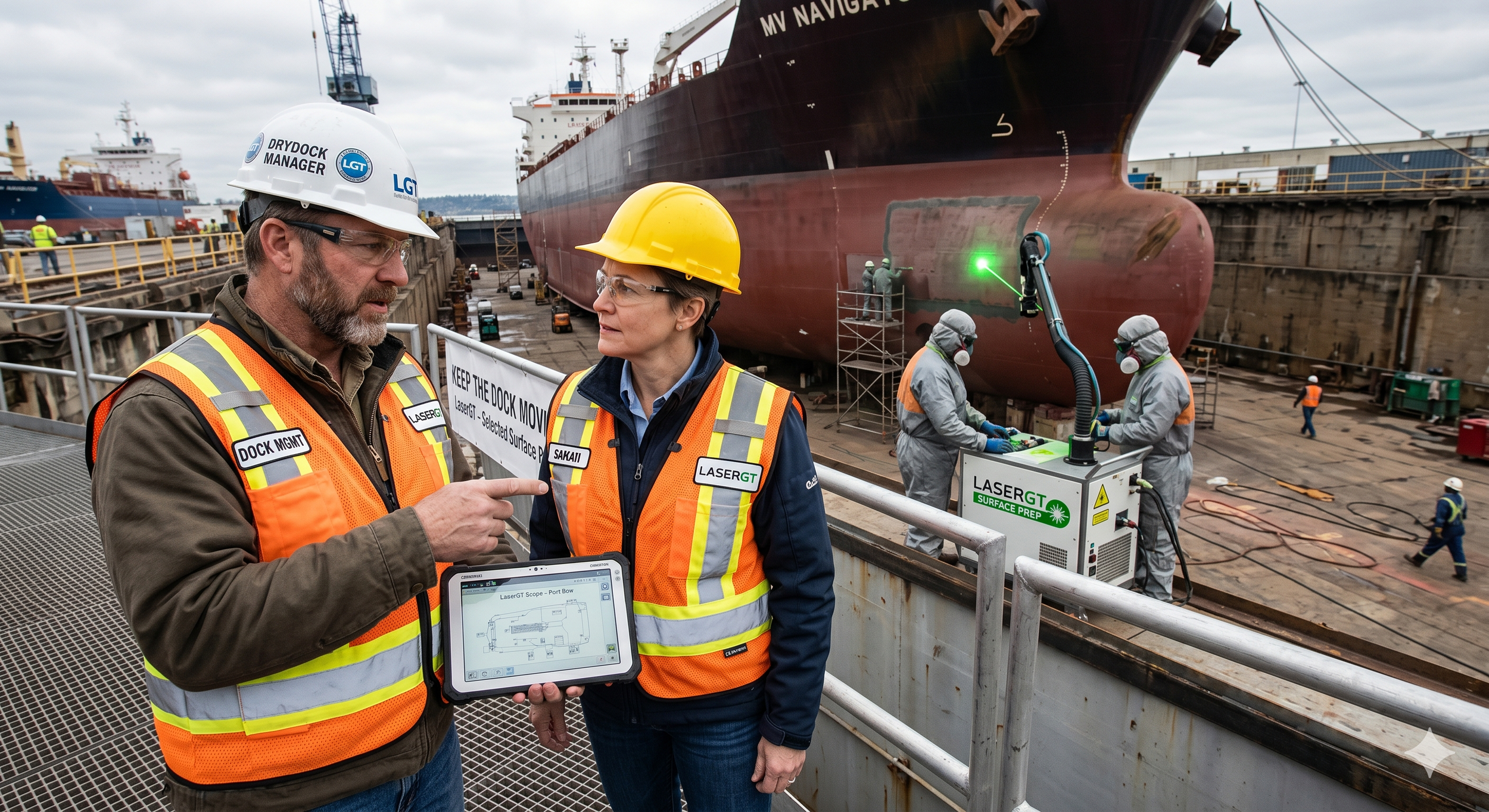
Keep the dock moving
Drydock managers
-
Use LaserGT when the job is:
Small
Complex
Local
Late-stage
Difficult to access
Near other trades
Expensive to isolate
Waste-sensitive
Schedule-critical
Suitable for parallel laser work fronts
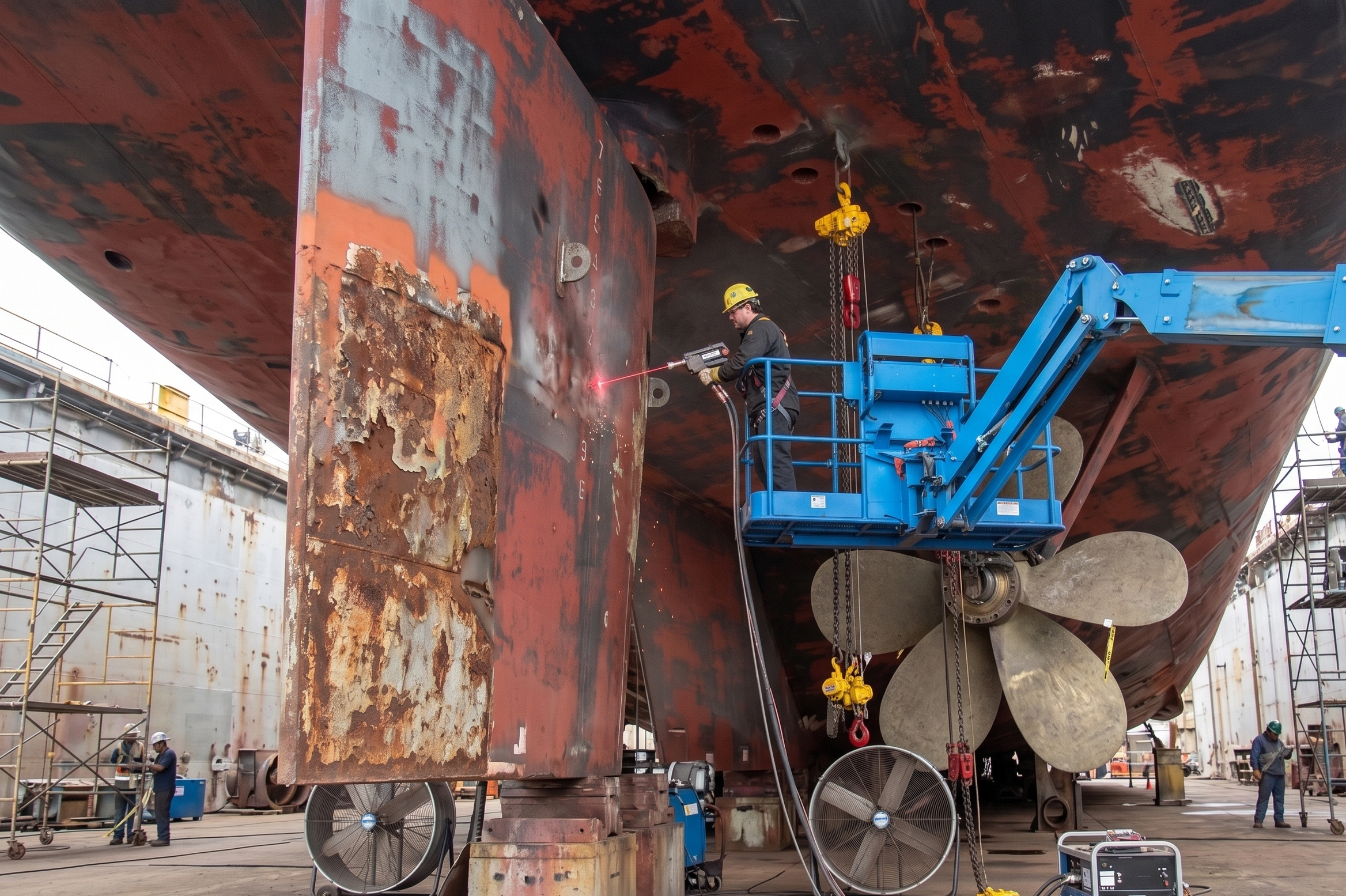
Reduce off-hire risk.
Shipowners / ship managers
-
LaserGT helps reduce risk on selected drydock scopes by reducing the burden around local corrosion repair, coating damage, weld preparation, tank repair, larger selected areas and punch-list work.
Fewer surprises.
Less waste.
Less disruption.
Better drydock control.
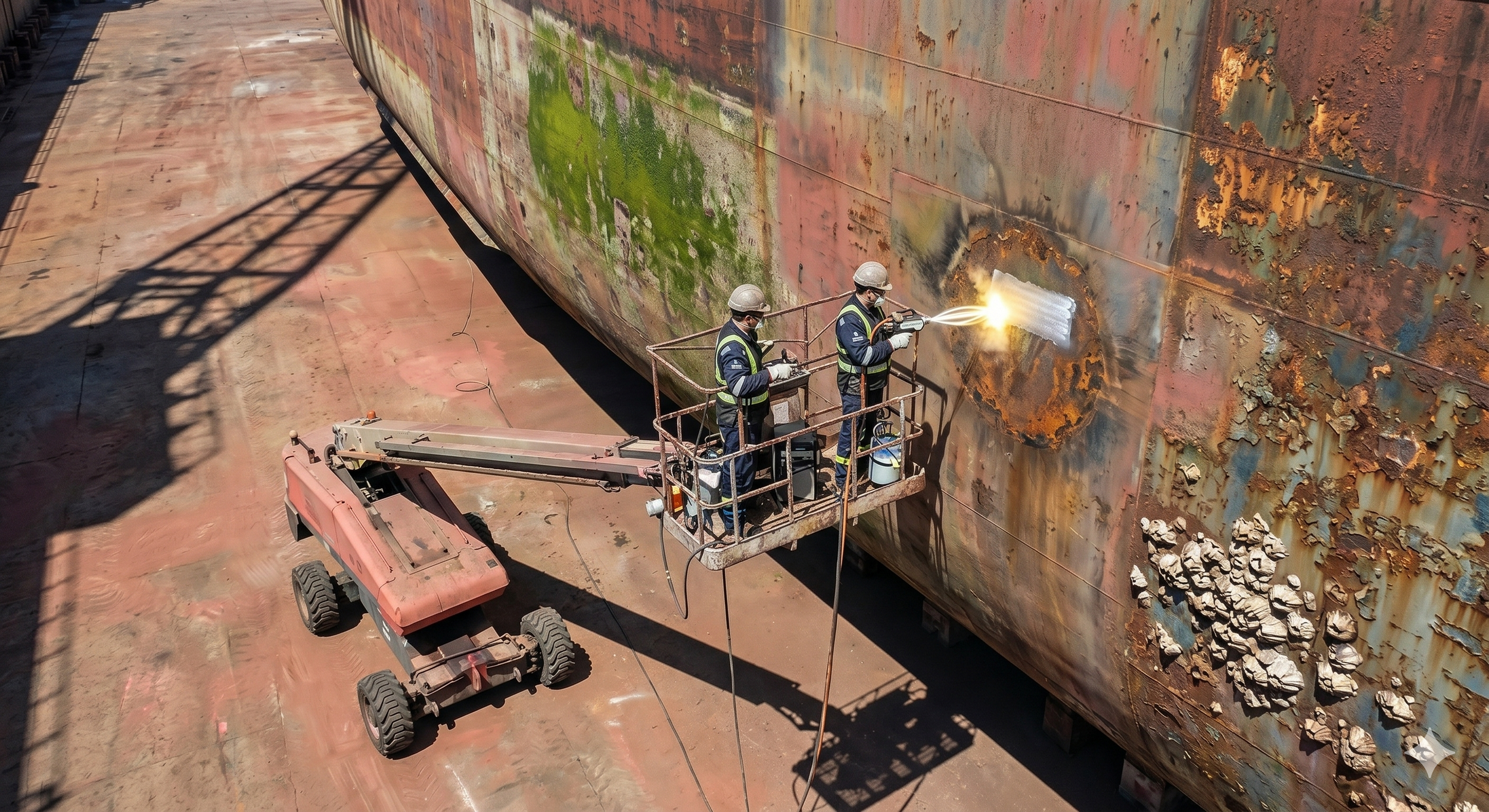
Built for controlled surface preparation.
Coating / QA teams
-
We can document:
Surface cleanliness
Surface roughness/profile
Dust control
Salt contamination where required
Method statement
Risk assessment
Fume extraction
Coating compatibility testing
Adhesion testing where required
Productivity by coating/rust type
No claims without proof. No coating work without acceptance.
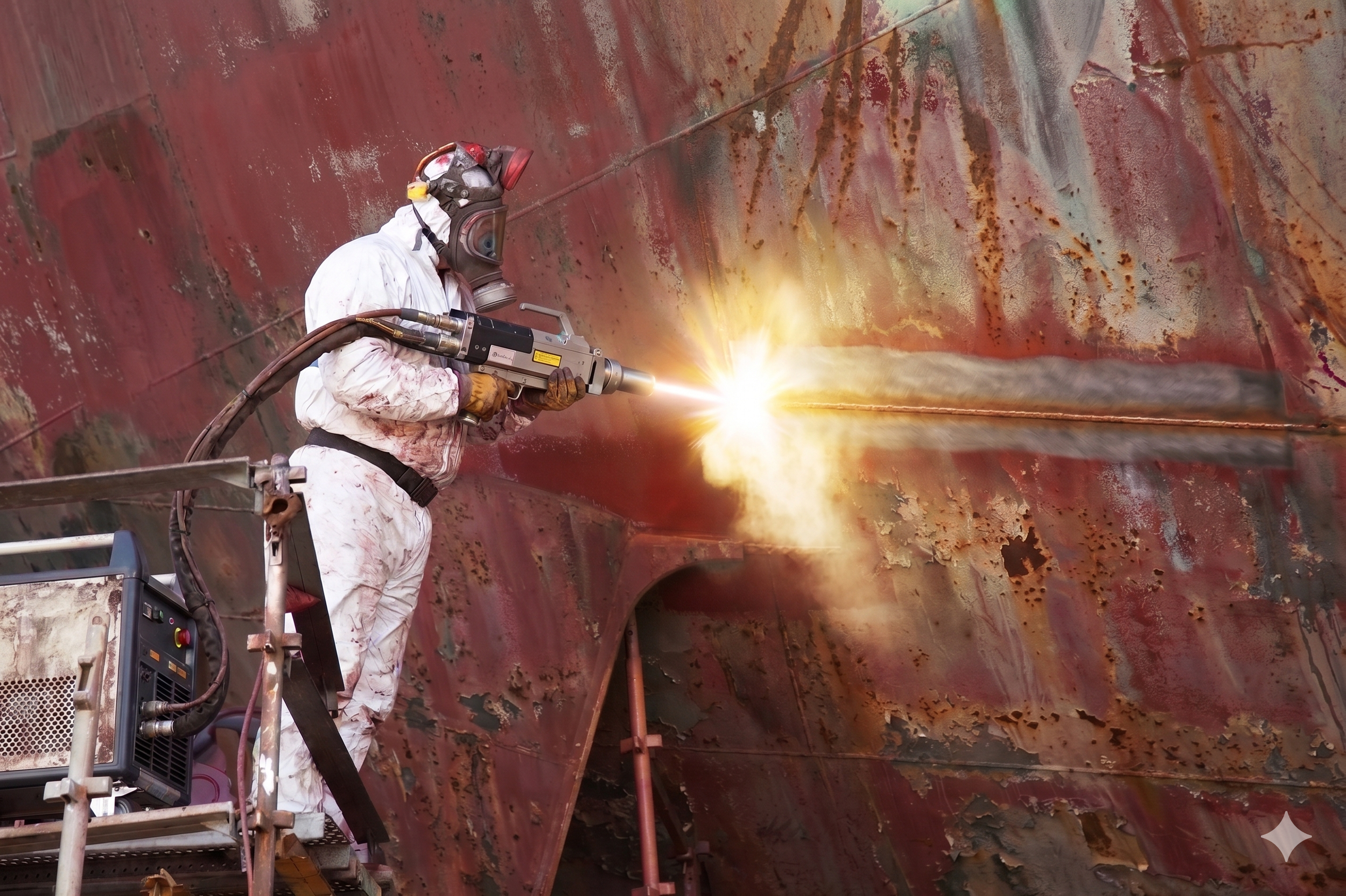
Less abrasive. Less waste. Less secondary burden.
HSE / environmental teams
-
The method still requires proper laser safety, fume extraction and controlled execution.
But for the right scopes, the total HSE burden can be significantly lower than conventional methods.
Cleaner execution is becoming a competitive advantage
Shipowners, operators and project stakeholders are increasingly looking beyond price and surface speed.
Waste, disposal, cleanup, environmental exposure, documentation and drydock efficiency are becoming part of the commercial decision.
Early adopters of zero-abrasive surface preparation can position themselves ahead of this shift.
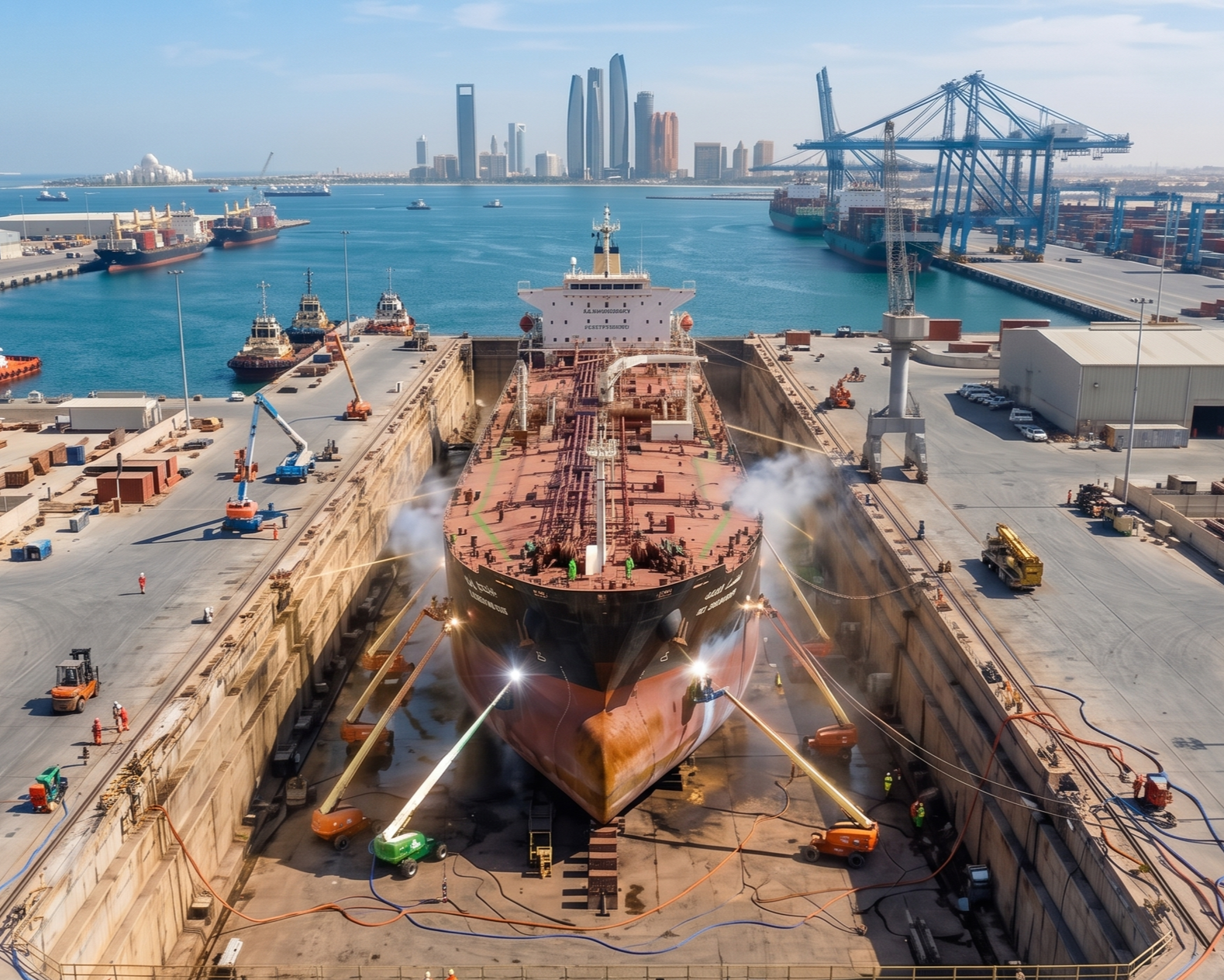
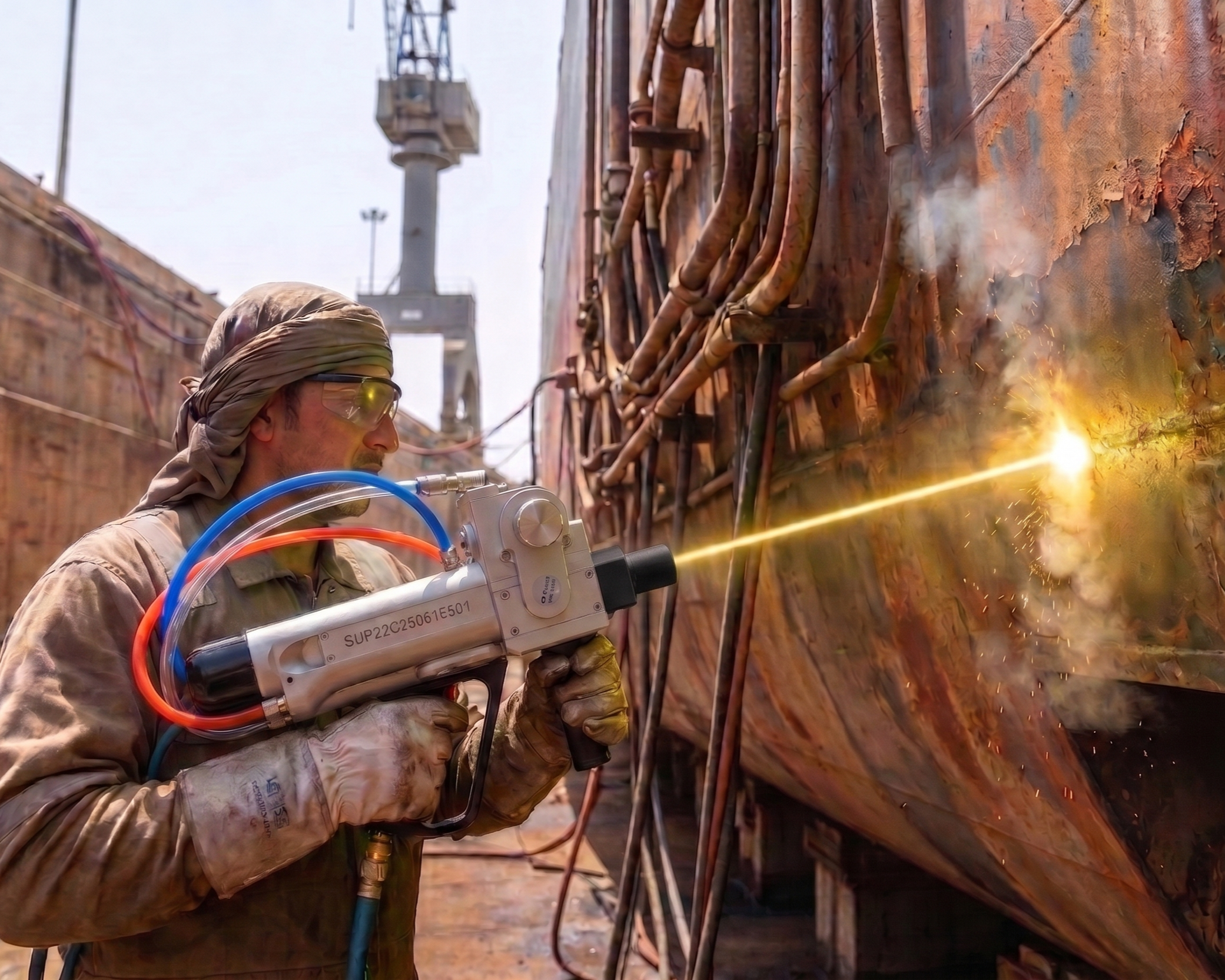
Early adopters of this capability may gain a competitive edge in high-spec fabrication and maintenance environments where quality consistency, execution efficiency and environmental compliance are increasingly driving project awards.
Compare LaserGT with conventional methods
| Method | Strong where | Weak where | Hidden burden |
|---|---|---|---|
| Abrasive blasting | Large open areas with established setup | Small complex repairs, sensitive areas, late-stage work | Media, dust, containment, cleanup, waste |
| UHP waterjetting | Salt removal, large flat surfaces, no abrasive requirement | Confined spaces, drying windows, poor drainage | Wastewater, sludge, flash rust, drying |
| Mechanical grinding | Very small repairs and weld touch-up | Larger selected scopes, consistency-critical work | Labour, fatigue, vibration, inconsistent quality |
| Vacuum/sponge blasting | Sensitive areas where dust must be reduced | Speed, cost, equipment footprint | Consumables, recovery, slower production |
| LaserGT | Local, complex and selected scopes — with ability to scale using multiple units and 6000W capacity | Cases where blasting is already fully optimized and disruption cost is low | Requires validation, safety controls and fume extraction |
The relevant question is not only how fast the steel is cleaned.
The relevant question is how fast the vessel moves through the dock with the least disruption to parallel work.
The first LaserGT drydock scope is not a demo. It is a cost comparison.
We do not ask drydocks to buy a promise. We measure the real execution difference.
The first scope should document:
01
Setup Time
02
Surface Preparation Time
03
Access Requirement
04
Containment Requirement
05
Waste Generated
06
Nearby Work Impact
07
Surface Cleanliness
08
Surface Roughness /Profile
09
Total Execution Burden
10
Scalability Potential
The goal is simple:
Show where laser surface preparation creates measurable commercial value.
Send us one real drydock scope
You send
Area size
Coating/rust condition
Location on vessel
Access situation
Current method
Containment requirement
Schedule pressure
Coating requirement
Whether larger areas or multiple work fronts are relevant
We return
Execution comparison
Cost driver map
Hidden burden estimate
LaserGT suitability
Proof required
Pilot recommendation
Scalability recommendation
Single-unit or multi-unit execution model
Before you plan the next blasting campaign, send us one real scope.
LaserGT helps drydocks, shipyards and shipowners identify where laser surface preparation can reduce waste, disruption, cleanup, work-front conflicts and schedule risk.
We can support:
Local repair
Selected-scope maintenance
Multi-laser drydock packages
6000W high-power surface preparation
Larger areas where the total economics justify laser
Not everywhere. Where it matters.